Plans submitted to transform vacant Faraday House into contemporary workspace
26.02.26 2 min read
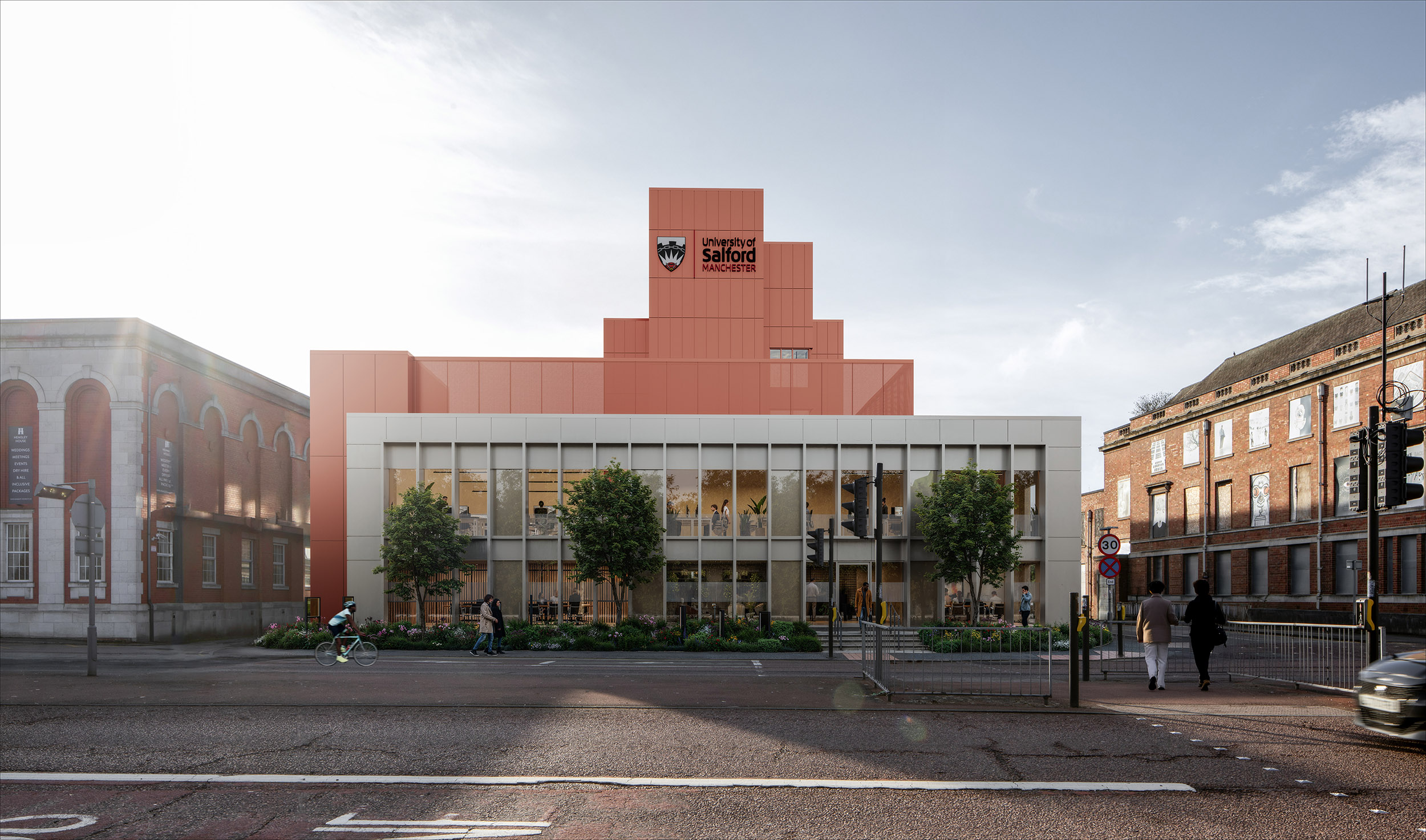
A University of Salford building is set to get a new lease of life, with plans submitted to refurbish Faraday House, situated next to the Irwell Place Car Park on the A6.
We’ve submitted, alongside our Crescent partners – Salford City Council and the University of Salford – the plans form part of the £2.5bn, 240-acre Crescent Salford masterplan regenerating this area of the city.
Originally serving as the headquarters for the Amalgamated Union of Engineering Workers (AUEW), the building later became part of the University of Salford’s campus in the 1970s.
Now, after being vacant for several years, new plans could see it transformed into 3,500m2 of high-quality, flexible working space, home to the University’s professional services teams.
The refurbishment of Faraday House also marks the next step in the University’s Campus Connectivity Plan, a major redevelopment of its research, teaching and public spaces.
Designed to encourage efficiency and promote wellbeing, the proposals incorporate green spaces, bike storage and an accessible entrance, aiming to create a refreshed, inclusive and welcoming environment for staff.
The plans have been designed by PRP, with interior design by OBI and landscape architecture led by Planit.
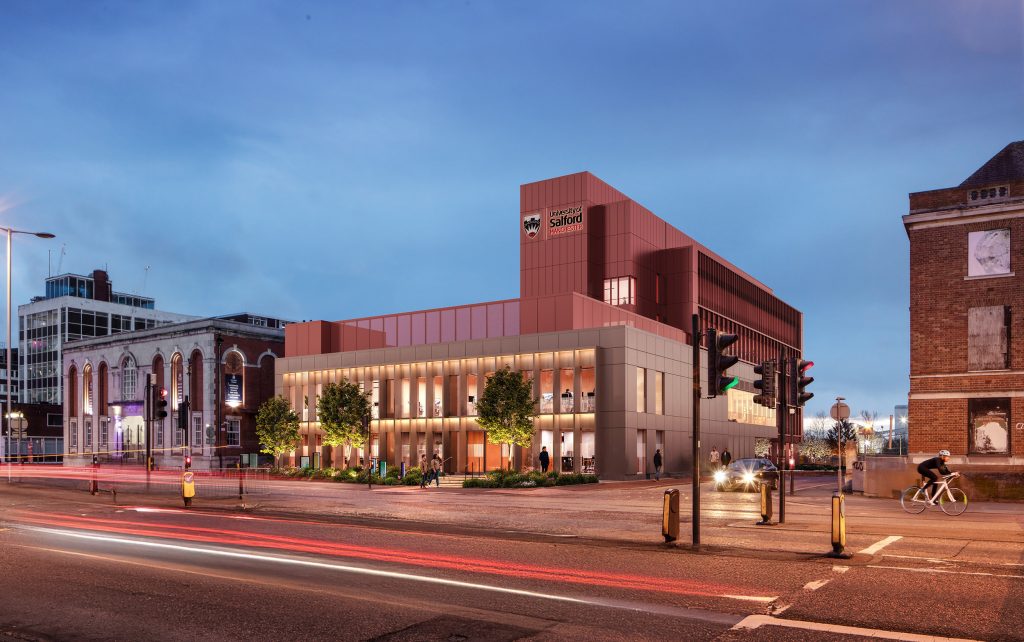
CGI of Faraday House
Work is already underway on several other campus buildings, including the world-class acoustics building, which is set for completion in 2027, the Thrive Health and Wellbeing Centre, due to complete in late 2026, and the Greater Manchester Institute of Technology (GMIoT), opening soon and dedicated to higher-level technical education and training.
If plans are approved, work is expected to begin on Faraday House in the spring and complete by winter 2027.
Max Bentham, development director, said:
Mark Wantling, Chief Infrastructure Officer at the University of Salford, said:
“It’s great to see plans being submitted for Faraday House – yet another example of how, together with partners, we’re reimagining the Crescent area. By transforming a brownfield site, the project will create a welcoming and sustainable environment for our professional services teams, while making a positive contribution to the local area. Our colleagues are the driving force behind the University’s success, and this development reflects our commitment to providing an environment where they can thrive.”
Salford City Mayor Paul Dennett said:
“It is positive news to see plans submitted for the vacant Faraday House, to bring it back to life and continue with our vision for the Crescent area.
“As a partnership, our overall aim is to regenerate this part of the city and create jobs, growth and educational opportunities that local people can benefit from.”